Artwork preview
Come as You Are, Pay as You Go
Coming the week of
Release note
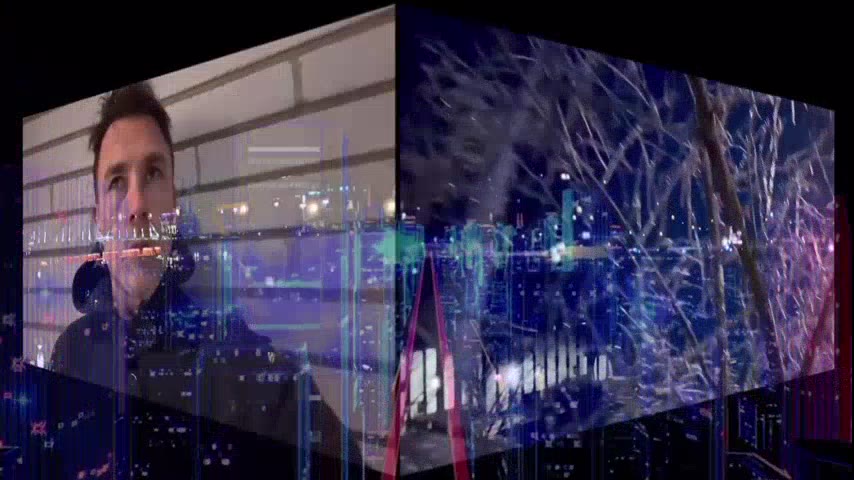
Come as You Are, Pay as You Go is planned for release on this site the week of January 25, 2027, the first anniversary of the events it documents. I am looking for a venue or gallery in Nashville to install or open the work around that anniversary, and for partners who can help with funding, materials, or a location. No venue or opening date has been confirmed. Get in touch.
About the installation
Come As You Are, Pay As You Go
Come As You Are, Pay As You Go is a new public-facing multimedia installation in Nashville, built from multiple channels of simultaneous visuals and original sound design. The display and the installation’s footprint will adapt to the selected venue. The channels run through a modular playback system programmed and controlled by the artist, allowing images, recordings, speech, and sound to repeat, fragment, overlap, disappear, and recombine.
The project aims to recreate the environment of confusion, distrust, fear, and anger surrounding the week of January 24, 2026. Events, testimony, records, and lived experience enter an unstable feedback loop where institutional failure, distrust, anger, fracturing, and further failure feed one another. Separate channels arrive at the same time, creating an overwhelming stream of anxiety, tension, chaos, uncertainty, frustration, and degradation of life coming from multiple angles at once.
Source material, scale, and sound
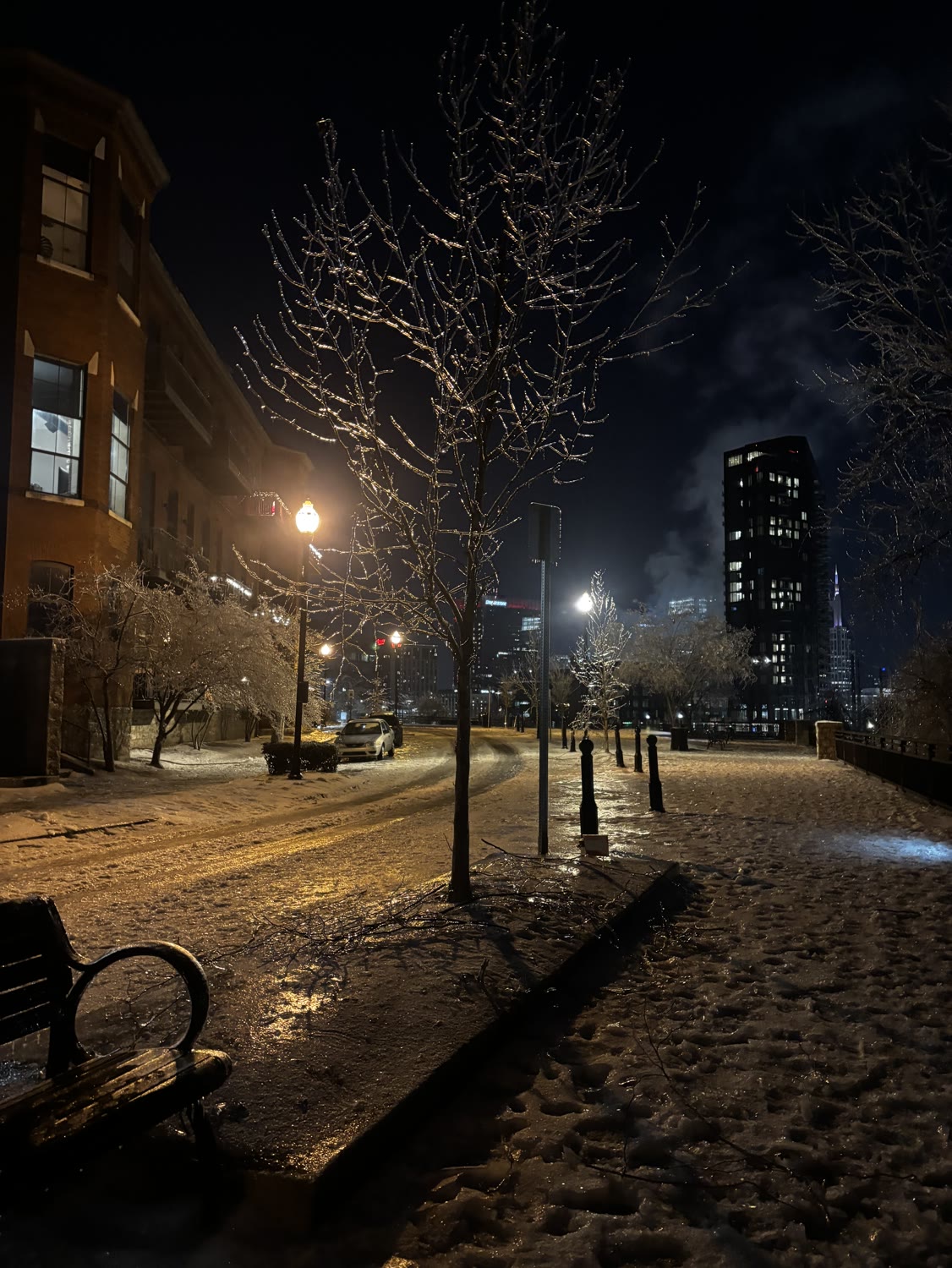
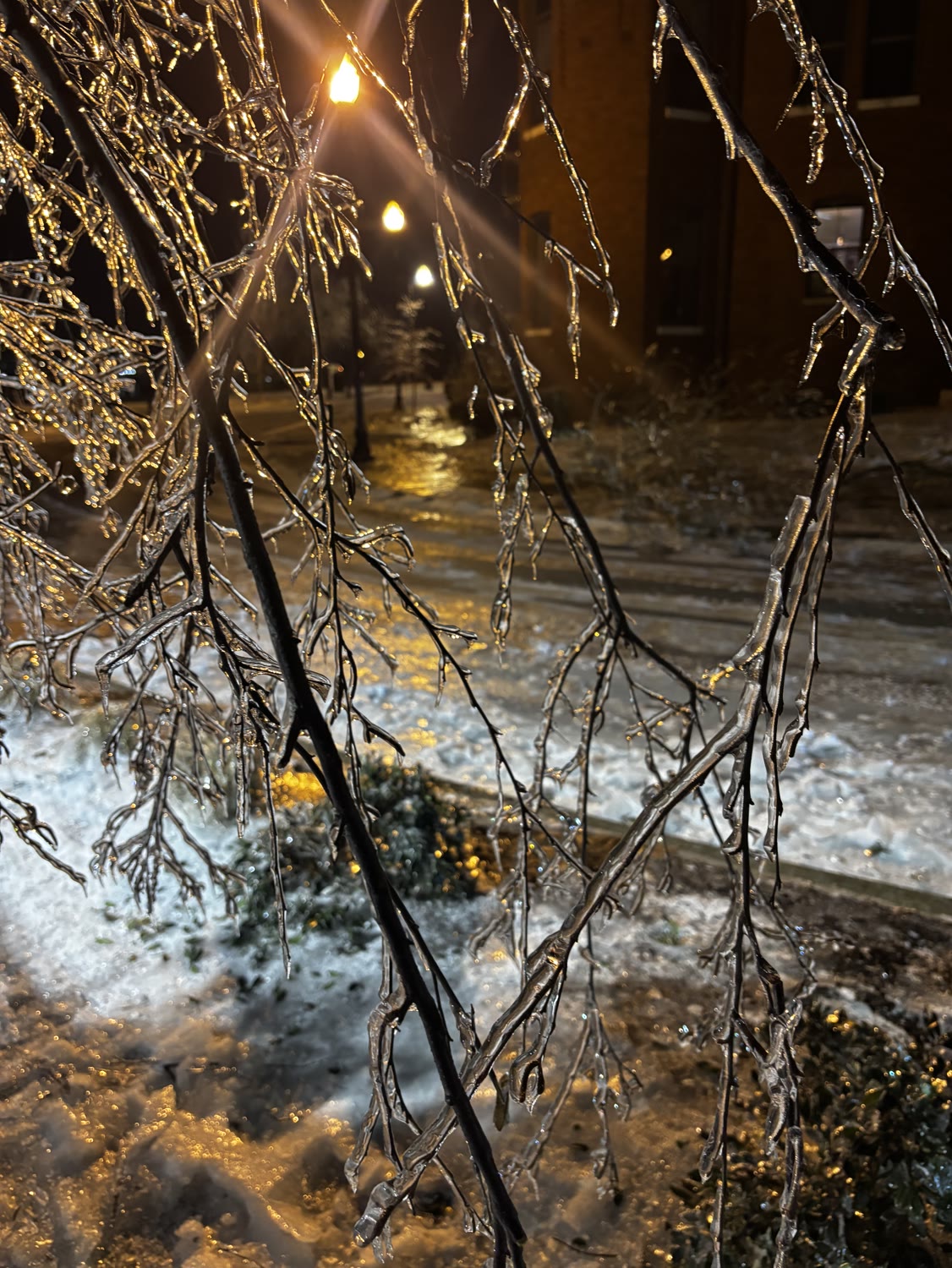
The installation recontextualizes material from the events surrounding the week of January 24, 2026. It draws from original photographs, video, field recordings, journals, and interviews made during Winter Storm Fern and its aftermath; footage from Minneapolis during Operation Metro Surge; emergency-room video and real-time journals; testimonials and interviews; public officials’ statements and news commentary; and public records, government records, and independent reviews of utility responses.
Together, these events echo from the national to the local to the individual, showing related conditions repeating at different scales: human beings treated as resources from which value can be extracted. At the same time, institutions prioritize their mission, authority, reputation, finances, and ability to impose their will over the people they are tasked with serving, leaving their constituents to absorb the consequences.
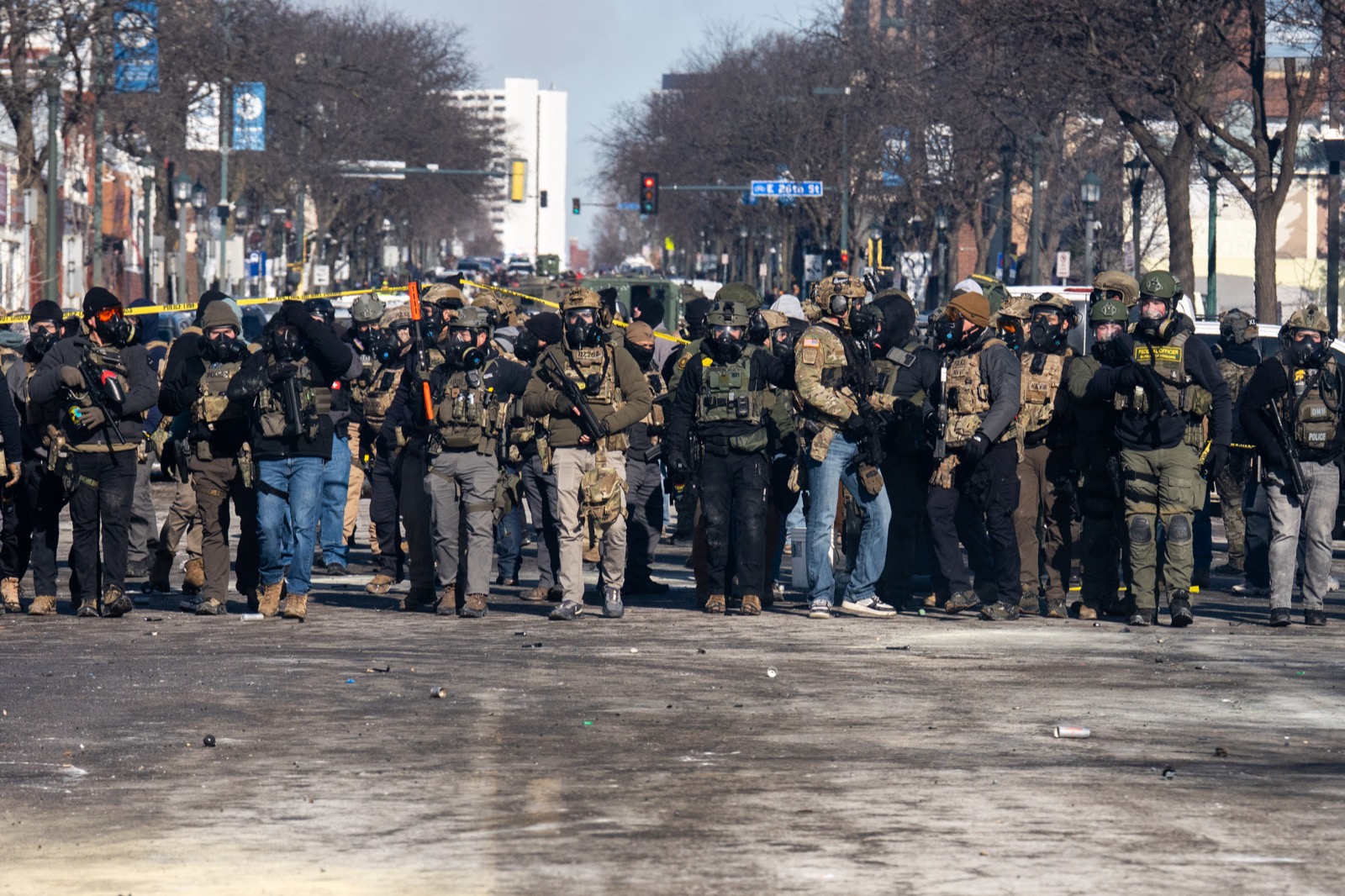
ICE and Border Patrol agents on Nicollet Avenue, Minneapolis, January 24, 2026, after Alex Pretti was killed. The photograph shows the scene afterward, not the shooting.
Photograph: Chad Davis. Source: Federal Agents Gather on Nicollet Avenue After Alex Pretti Shooting. License: CC BY 4.0. Resized; not cropped.
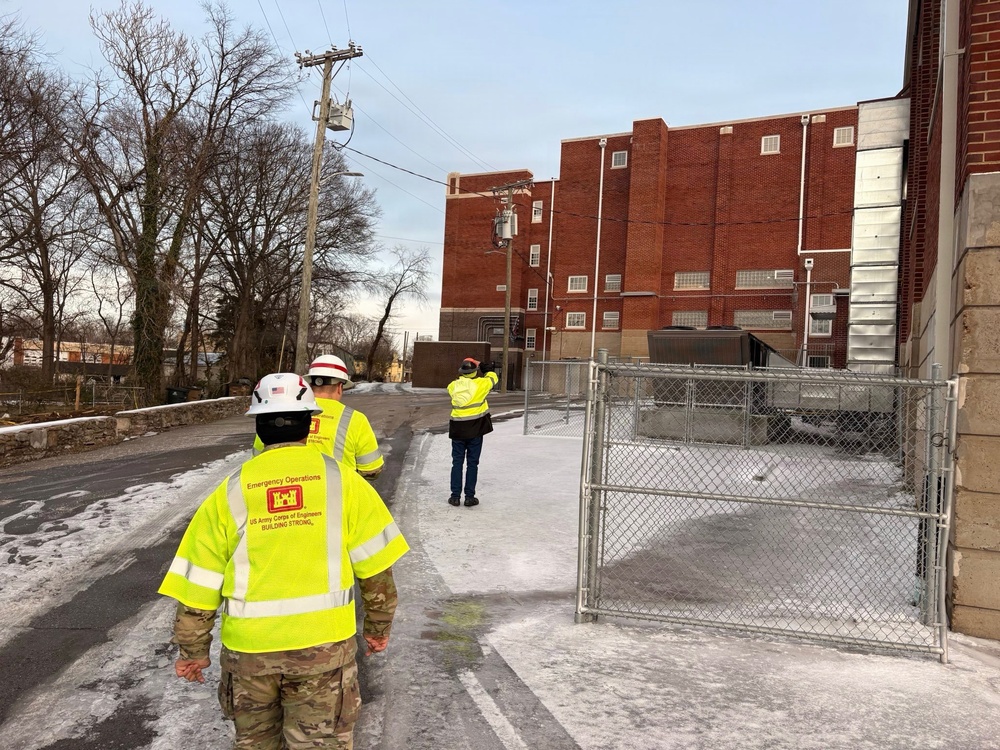
Nashville, February 2, 2026. A U.S. Army Corps of Engineers power team inspects East Nashville High School before installing emergency power after Winter Storm Fern.
Photograph: Adam Cocke, U.S. Army Corps of Engineers. Public domain. The appearance of U.S. Department of War (DoW) visual information does not imply or constitute DoW endorsement.
Nashville Scene Ice Storm Leaves Lasting Damage for Families and Metro Leaders
In Minneapolis, residents organized, demonstrated peacefully, and called for ICE to leave their communities while the federal government continued Operation Metro Surge. On January 24, 2026, federal immigration agents pinned Alex Pretti, a 37-year-old intensive care nurse at the Minneapolis VA, to the ground on Nicollet Avenue, then shot and killed him. His death enters the installation as part of a larger record of state-sanctioned violence and of government power imposed upon the people it is meant to serve. Footage recorded in Minneapolis will appear alongside public officials’ statements about what happened, bringing the visible record into direct contact, and contrast, with the official accounts.
Minneapolis, January 2026
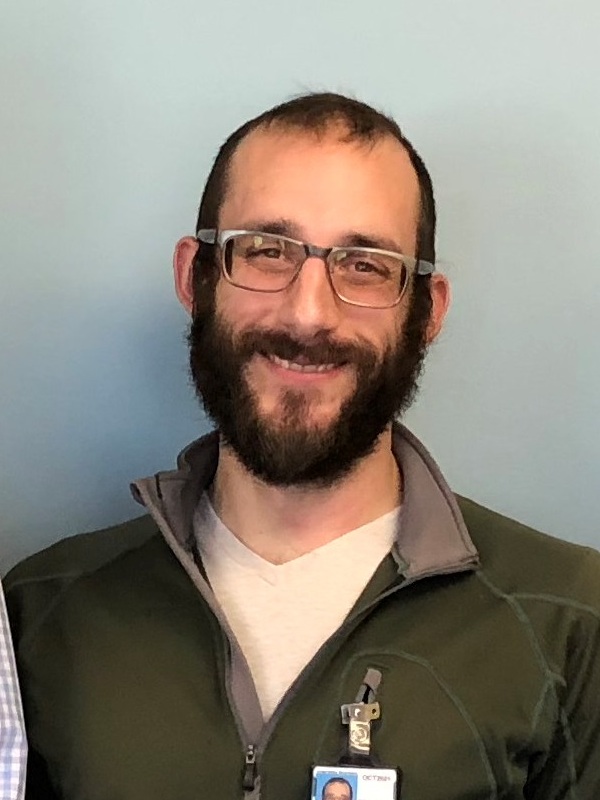
Alex Pretti, circa December 2018.
Photograph: U.S. Department of Veterans Affairs / Wikimedia Commons; public domain. Detail of a group photograph, as cropped on Wikimedia Commons.

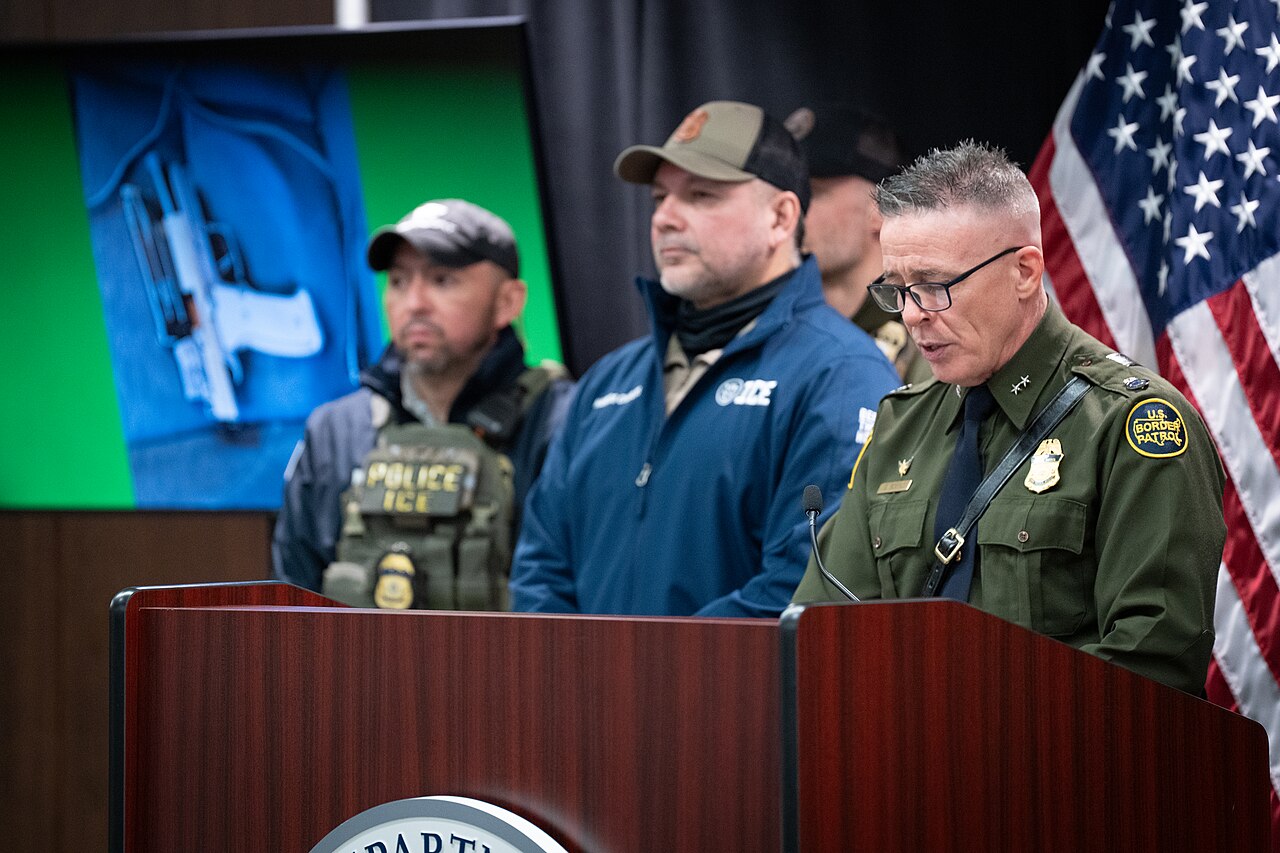
Gregory Bovino and Marcos Charles at a federal press conference in Minneapolis, January 24, 2026.
Photograph: Jerry Glaser, U.S. Customs and Border Protection. Public-domain U.S. government work. Source: U.S. Customs and Border Protection on Flickr.
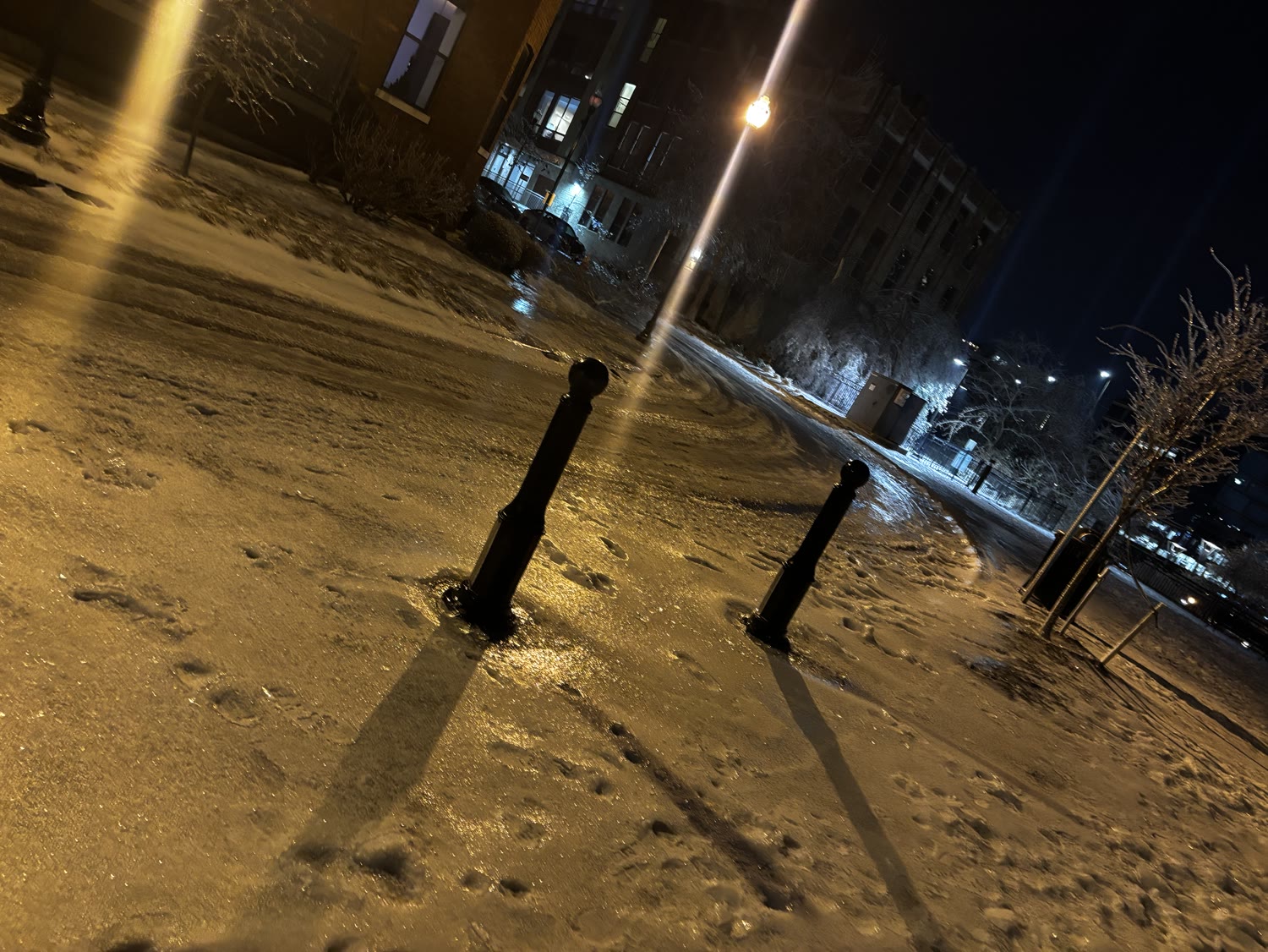
In Nashville, Winter Storm Fern knocked out power to approximately half of NES customers, and full restoration took about twelve days. During one of Nashville’s coldest stretches in years, residents faced days of cold, uncertainty, and isolation. Some had to choose whether to spend savings on temporary shelter or endure the conditions at home. Some could not leave their apartments. Some could not call anyone.
Winter Storm Response Commission · February 23, 2026
Metro Nashville Network · Watch on YouTube at 1:41:00
NES’s own 2024 annual report shows Contract Tree & Grass expenses falling from $21,280,000 in fiscal 2023 to $13,882,000 in fiscal 2024, a cut of about $7.4 million, while NES publicly said its tree-trimming budget had increased every year. NES received the financial benefit of cutting costs while Nashville residents absorbed the risk. NES was playing Russian roulette with the lives of people in Nashville. It was not playing Russian roulette with itself.
During the crisis, NES devoted time, energy, and effort to protecting its image. The Nashville Scene reported that NES already had public relations contracts in place before the storm and described its reputation team at work during the outages. In the aftermath, NewsChannel 5 found that NES signed new contracts with the lobbying firm Stones River Group on February 6 and with Hall Strategies on February 9 to deal with the public backlash. What an institution protects first in a crisis shows its priorities. NES protected its image while Nashville residents were left in the cold.
Further reading
- Nashville Scene After the Storm: NES Faces the Fallout of Extended Power Outages
- NewsChannel 5 Investigates NES spent tens of thousands of dollars on lobbying firms after ice storm to deal with public backlash
- NewsChannel 5 Investigates NES audit warned of tree trimming problems months before ice storm outages
- Nashville Electric Service 2024 Annual Report, page 33 (Contract Tree & Grass)
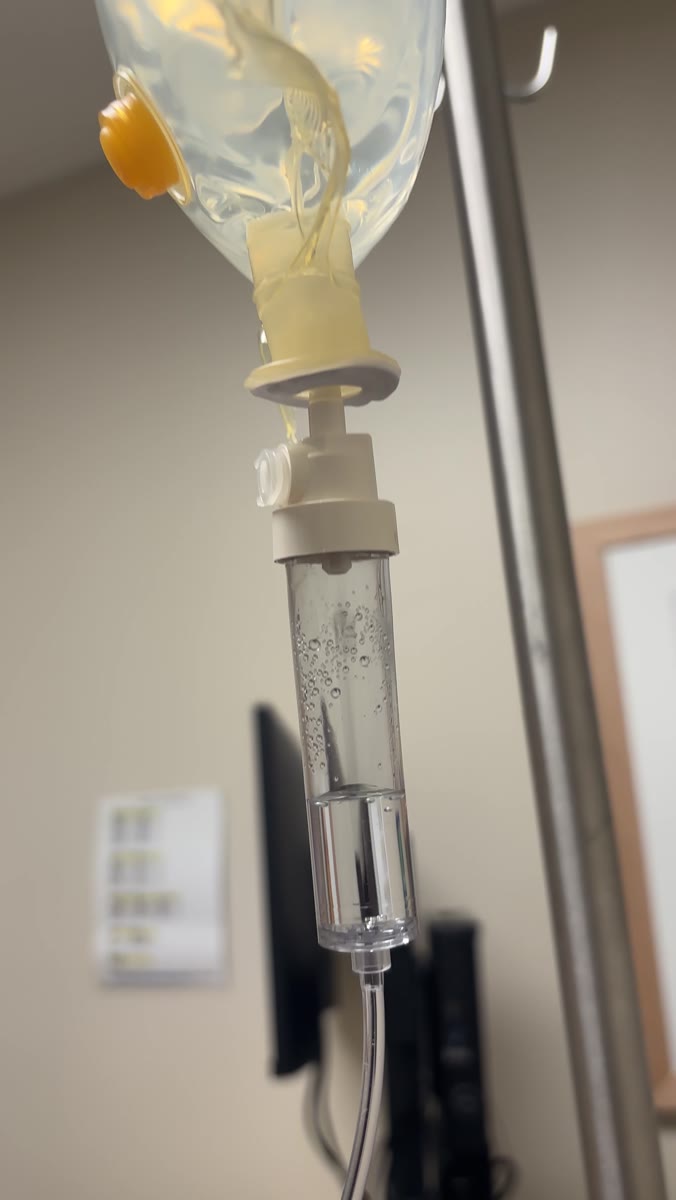
At the individual level, emergency-room recordings document the same kind of pressure reaching into basic survival. Individuals describe playing Russian roulette with their health because medicine, food, rent, and medical care are competing for the same limited resources.
Original sound design is built from physical storm sounds, including trees splitting and falling, failing transformers crackling, and electrical equipment exploding, combined with drones, chord beds, rhythmic pulses, field audio, speech, and silence. Abstract and documentary material exist together within the same environment.
Extraction, accountability, and recourse
The work examines institutional preservation taking precedence over the people these institutions were tasked with serving. Government, public agencies, power brokers, and other institutions protect their priorities, authority, reputation, finances, and narratives while people become collateral damage.
The relationship becomes extractive, with human beings treated as resources from which value can be extracted: money, power, and even their humanity. When things fail or break down, people seek recourse. Pursuing accountability can require time, money, expertise, and sustained effort. The relationship becomes increasingly adversarial, feeding distrust, anger, and fracturing back into the same conditions that produced them.
Nashville is still carrying wounds from Fern. Residents voiced their concerns vehemently, and many still feel unheard. This installation is a search for accountability, an acknowledgment of unresolved harm, an amplification of those voices, and an effort to put these experiences on record. It is about speaking truth to power and preserving a record that can be returned to rather than allowing these experiences to disappear or be diminished.
Audience
The installation is intended to be free and open to the public. It is for Tennesseans who lived through Fern, communities affected by Operation Metro Surge in Minneapolis, and people who have suffered the effects of institutions failing to serve them.
The work is for people who are scared, angry, traumatized, and still willing to exchange ideas and work for change. It offers a way to process what happened, to hear experiences that remain unresolved, and to create a record around which people can begin talking to one another again. The project is intended as a step toward reconciliation and toward finding enough common ground to move forward together, beginning in Nashville.
Partner on the installation
I’m looking for a venue or gallery in Nashville to install or open the work around January 25, 2027, the first anniversary of these events, and for partners who can help with funding, materials, or a location. No venue or opening date has been confirmed. If you can help, I’d like to hear from you.